Aluminium die casting · Aligarh, India Est. 1993
Manufacturing & capabilities

The processes that turn a drawing into a part.

High-pressure casting, in-house tooling, machining, finishing and inspection: the published capability set at the Aligarh works, without invented tonnages or tolerances.

120 to 800
HPDC range, tonnes
7 to 650
Injection moulding, tonnes
In-house
Tool room & design
CNC/VMC
Secondary machining
01The works

One facility, fewer handoffs.

Tooling, melting, casting, machining, coating and inspection are kept inside the same works. For a buyer, that means the team reviewing the drawing is close to the team running the die and checking the finished part.

The capability list below is limited to what the company publishes. Where a specification is not published (such as machine-by-machine tonnage, achievable tolerances, alloy grades beyond the lighting range, or inspection standards), we ask you to confirm it with the sales team for your component.

Est. 1993 Aligarh, UP ADC-12 lighting castings In-house tooling
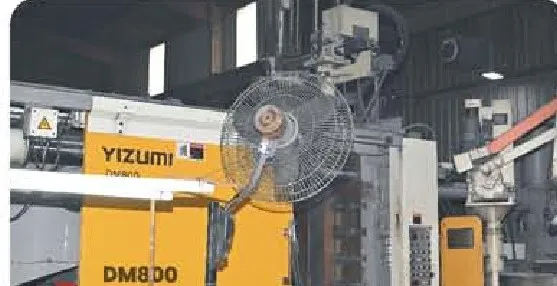
High-pressure die casting machine at the Aligarh works
Die casting cellHPDC
02Capability detail

What each stage covers.

Use this as a starting point for an enquiry. The specific process, finish and inspection plan for your part is confirmed in writing.

01

High-pressure die casting

High-pressure die casting is the core of the works. Aluminium is melted on site, degassed with nitrogen and transferred to the casting cell, where the shot is formed in hardened tooling. The documented machine range runs from 120 to 800 tonnes.

120 to 800 T machine rangeIn-house melting & N₂ degassingAluminium ADC-12 for lighting fixtures
02

Tooling design & development

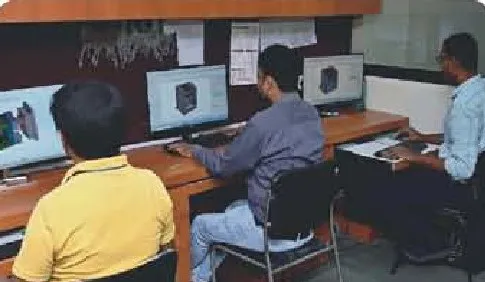
Tooling is developed by the company’s own tool development team and maintained in an in-house tool room. That keeps die design, trials and maintenance inside the same facility as production, and gives buyers a single technical point of contact from drawing to first article.

In-house tool roomDedicated tool development teamTraining room for toolroom skills
03

CNC & VMC machining

Castings can move from the die-casting cell to CNC and VMC machining and to special-purpose machines built for repeat operations. The works also lists machining as part of its product range, so a buyer can discuss a machined component rather than a raw casting alone.

VMC machiningSpecial-purpose machinesMachined castings on request
04

Finishing & coating

A powder coating facility, installed in 2007, and sand blasting support the finishing stages of lighting components and other cast parts. Finish requirements should be specified with the enquiry so they can be confirmed against current line capability.

Powder coating lineSand blastingFinish specified at enquiry
05

Injection moulding

Injection moulding complements the metal side of the business, with a documented 7 to 650 tonne machine range. It supports the plastic parts, lenses and covers that sit around a cast lighting body.

7 to 650 T rangeFixture componentsPaired with casting & assembly
06

Quality & inspection

The company profile describes an in-house quality testing unit and laboratory testing for physical and mechanical properties. A 3D scanner supports dimensional verification and reverse engineering. Inspection scope for a specific component is agreed at the quotation stage.

In-house quality testing unit3D scanningDimensional verification
07

Warehousing & packaging

Lighting fixtures are packed individually in corrugated boxes with shock-proof thermocol, and the company operates a warehousing and packaging unit. Export packing and labelling requirements can be discussed with the sales team.

Individual corrugated boxesShock-proof thermocolWarehousing unit
03Production route

The sequence, stage by stage.

This is the documented manufacturing journey. Not every component uses every stage; the quotation defines the route for your part.

01

Requirement

Share a component drawing, a physical sample or a clear description of the part and its duty. Quantity, alloy, finish and delivery expectations help frame the review.

02

Engineering & tooling

The tool development team reviews the part for casting and die design. Tooling is built and maintained in-house, with trials before production.

03

Melting & degassing

Aluminium is melted in the foundry and treated with nitrogen degassing before transfer to the casting cell.

04

High-pressure casting

The shot is formed on a 120 to 800 tonne HPDC machine. Process settings are established for the die and part.

05

Machining & finishing

Where the component requires it, castings move to CNC/VMC machining, special-purpose operations and finishing such as powder coating or sand blasting.

06

Inspection & dispatch

Parts are checked against agreed requirements and packed for dispatch. Lighting fixtures are packed individually in corrugated boxes with shock-proof protection.

04Tooling & engineering

Bring the drawing. We will review the part.

The tool development team works from a 2D drawing, a 3D model or a physical sample. Early questions usually cover the alloy, draft, wall sections, machining allowance, finish and inspection requirement.

Tool development team reviewing die design
Tool development teamEngineering
Next step

Send a drawing or describe the component.

Request a quote Call +91 98370 92220